
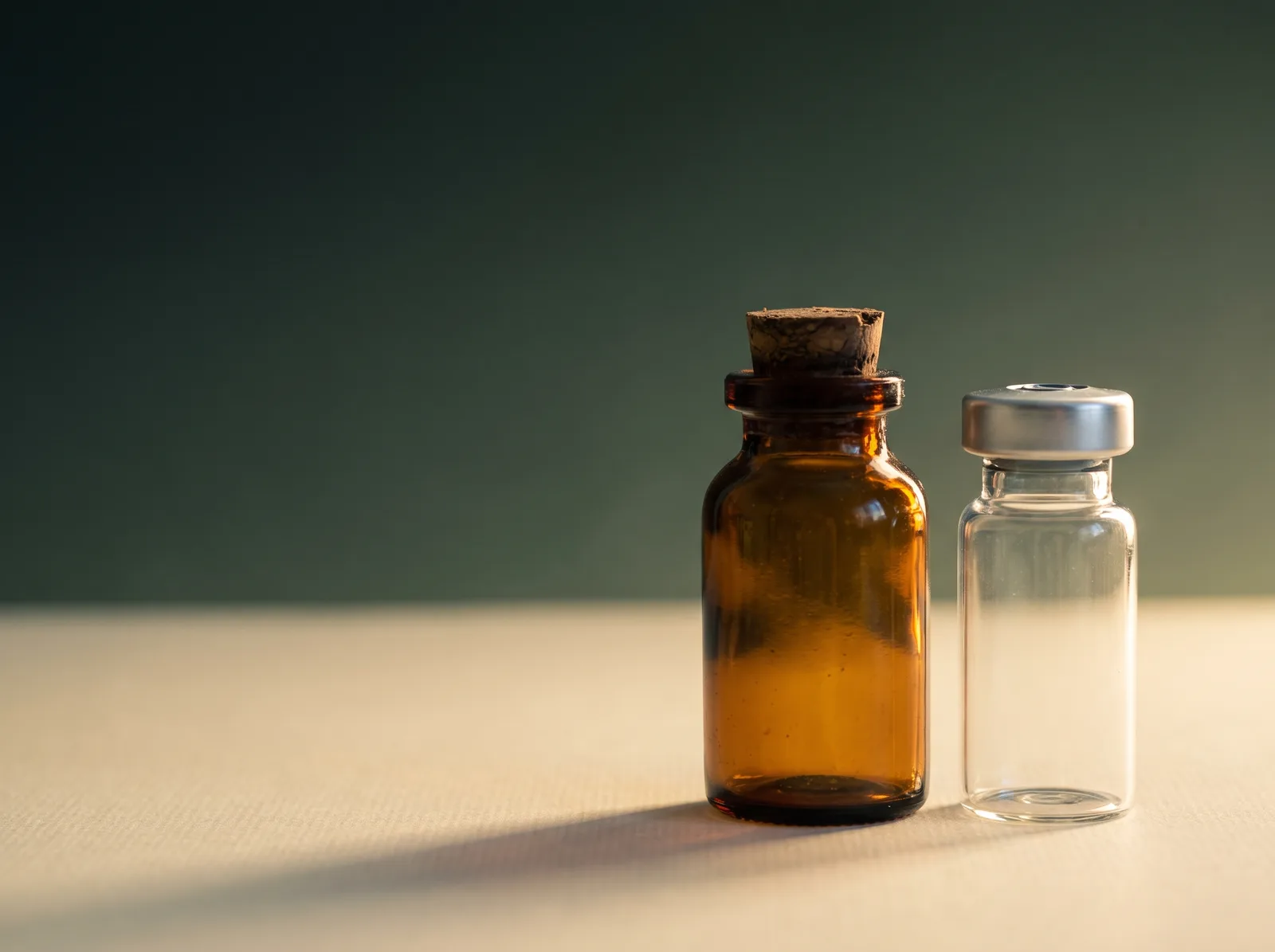
Compounded peptides are prepared by state-licensed, FDA-regulated compounding pharmacies under a valid prescription, with quality standards and clinical oversight. Research chemicals are unregulated products sold “for research use only, not for human consumption” — a legal disclaimer, not a safety standard — with no oversight, no verified dose, and no accountability. Both may arrive as a vial in the mail; that is where the resemblance ends.
The regulatory difference
Compounding is a licensed pharmacy activity. A 503A compounding pharmacy prepares a medication for a specific patient against a valid prescription, under state board of pharmacy regulation and FDA oversight of the practice. Research-chemical vendors operate outside that framework entirely — they are not pharmacies, they do not require prescriptions, and the “not for human use” label is what lets them avoid drug regulation.
The quality difference
This is where the gap becomes a safety issue. Compounded medications are prepared to pharmacy standards for identity, purity, and concentration. The research-chemical market has no such requirement, and independent testing has repeatedly found peptide products that were mislabeled, under- or over-concentrated, or contaminated. When you cannot verify what is in the vial or how much, dosing becomes guesswork with an unknown substance.
The accountability difference
With a compounded medication, a licensed clinician is responsible for deciding it is appropriate for you, and a licensed pharmacy is responsible for preparing it correctly. If something goes wrong, there is a clinical relationship and a regulated entity. With a research chemical, you are the “researcher” the label refers to — there is no clinician, no pharmacist, and no recourse.
An important shared caveat
Neither is an FDA-approved finished product, and compounded peptides are only available where the peptide itself has a legal pathway — as of July 2026 that clearly includes tesamorelin, sermorelin, and ipamorelin.
Others are in motion. On July 23, 2026, an FDA advisory committee voted to recommend adding BPC-157 (8–6, one abstention) and KPV to the 503A compounding list, against the agency’s own briefing documents. That recommendation is non-binding: both remain Category 2, and neither is legally compoundable until the FDA acts and formal rulemaking completes. Treat any seller citing that vote as proof of legality with the same skepticism as a “research use only” label, and verify current FDA listings before acting.
The comparison here is about how a peptide is obtained — the legal status of any specific peptide is a separate check.
Compounded medications are prescribed and prepared by state-licensed, FDA-regulated compounding pharmacies. They are not FDA-approved finished products, and nothing here is a promise of results or medical advice.
Frequently asked questions
What’s the difference? Compounded = licensed pharmacy, prescription, oversight. Research chemical = unregulated, no prescription, “not for human use.”
Are research chemicals safe? Unknowable — no quality standards, and testing has found mislabeling and contamination.
Are compounded peptides FDA approved? No, but compounding is a regulated pharmacy activity, unlike the research-chemical market.
Why the “not for human consumption” label? A legal shield that keeps sellers outside drug regulation; it does not make the product safe.
How do I ensure I’m getting compounded? Confirm a prescribing clinician and a named, state-licensed pharmacy.
Sources
- FDA, Section 503A compounding framework and PCAC July 2026 materials (fda.gov), captured 2026-07-23.
- OpenLoop Health, peptide regulatory and quality guides (openloophealth.com), captured 2026-07-23.